Lynden
What flat ground does to a drain line
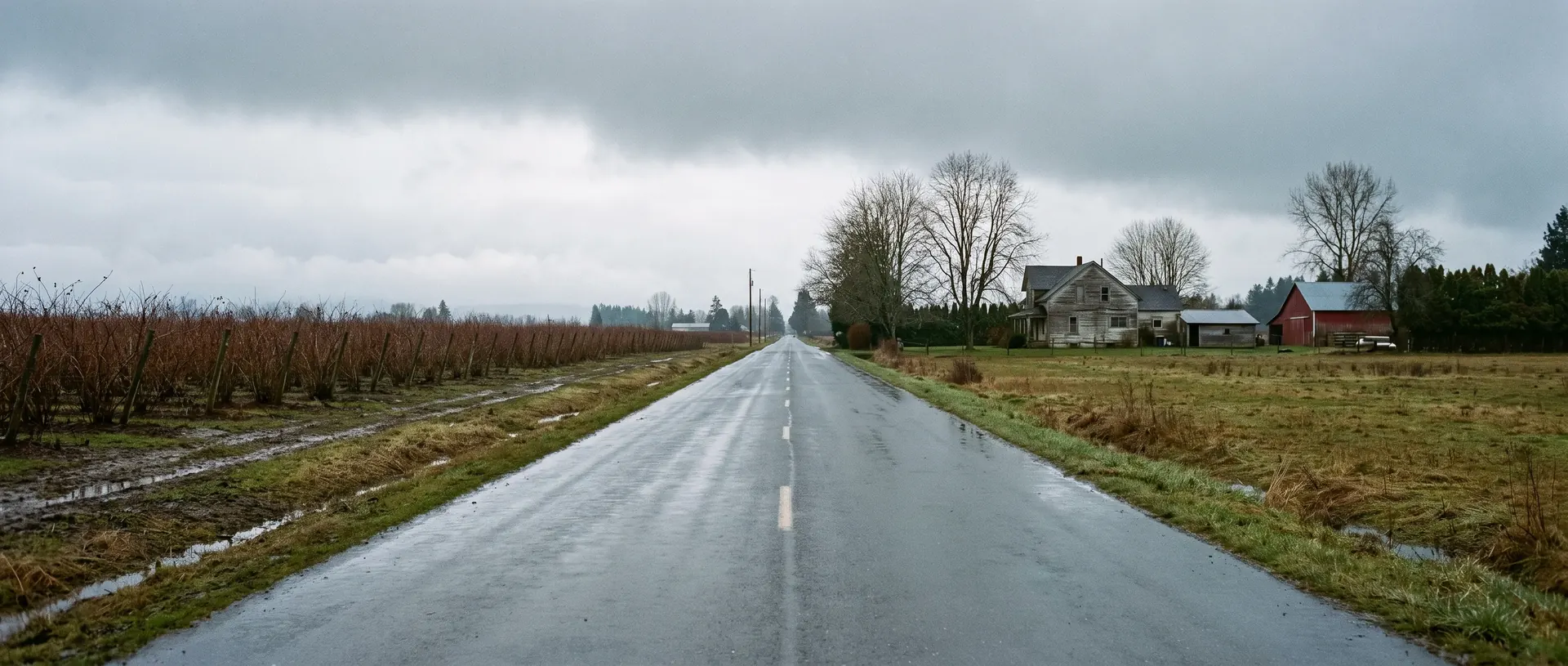
Lynden is the flattest ground we work on, and that is the fact that shapes almost every job here.
A sewer line moves waste using gravity. The steeper the fall, the faster the water travels and the more energy it has to carry solids along with it. Get that fall right and the pipe scours itself clean every time somebody flushes. Take the fall away, and the water slows to a crawl. Solids settle out and stay where they land, and the pipe starts silting up from the bottom.
On the acreage around the Guide Meridian and Badger Road, add distance to that. A farmhouse set well back from the road can have a run to the septic tank several times the length of a city lateral, all of it on ground with barely any slope. Those lines do not fail suddenly. They get slower over a period of months, then a year, and one day a load of washing is the thing that finally stops them.
In town, the compact city core is on Lynden city sewer with shorter runs and better access, and the calls look more like the ones anywhere else: fixture blockages, kitchen grease, wipes. The dividing line is not really city against country. It is how much fall the pipe has.
What we do here
What we do in Lynden
Drain cleaning for slow fixtures in town and on the acreage.
Hydro jetting, which is the right tool for long flat runs that have silted up rather than blocked.
Sewer camera inspection to find bellies and confirm grade before anyone digs.
Main sewer line clearing for city laterals and long house to tank runs.
Clogged toilets and fixture drains throughout.
Kitchen and grease line cleaning for houses and the small commercial kitchens downtown.
Sewer line repair for bellies and sections that have lost their fall.
Emergency drain service for active backups, ahead of scheduled work.
Local knowledge
Why a slow drain matters more here than elsewhere
In a house with plenty of fall on the lateral, a drain is either working or it is not, and the change is abrupt. On flat Lynden ground the failure is gradual, which is genuinely useful information if anybody notices it.
A line that has taken two years to get slower is telling you it has developed a low spot. Water sits in that dip, solids settle into it, and every visit clears a channel that fills back in. You can keep buying that clear, or you can find out where the dip is.
That is a camera job, and on a long rural run it is the only sensible starting point. Once the belly is located and its depth is known, a spot repair to re establish fall over that section fixes it permanently. Guessing costs more than filming.
Jetting is the other tool that earns its keep here. Silt and sludge over a long flat run is exactly what a cable is bad at and what water at pressure is good at, because the problem is the whole length of the pipe rather than one point in it.
Questions
Lynden questions
Why is my drain slow but not blocked?
Usually because the line has lost fall somewhere, or is silting up along a long flat run. Water gets through, solids do not. On the ground around Lynden this is the most common pattern we see, and it is worth a camera run rather than another clear.
Do you work on farm and acreage properties?
Yes. Long house to tank runs, buried cleanouts and outbuildings are normal here. We clear and camera the drain line. We do not pump tanks or work on drain fields.
Can you clear a very long septic drain line?
Yes, and length is part of what we plan for. What matters more than the distance is whether there is proper access at the house end. If there is not, installing a cleanout is usually the first thing worth doing.
How do I know if I have a belly in my sewer line?
The tell is a drain that has been getting gradually slower over months, often with a gurgle, and that clears easily and then returns. A camera run shows standing water sitting in the dip, which is unambiguous once you see it.
Tell us the symptoms