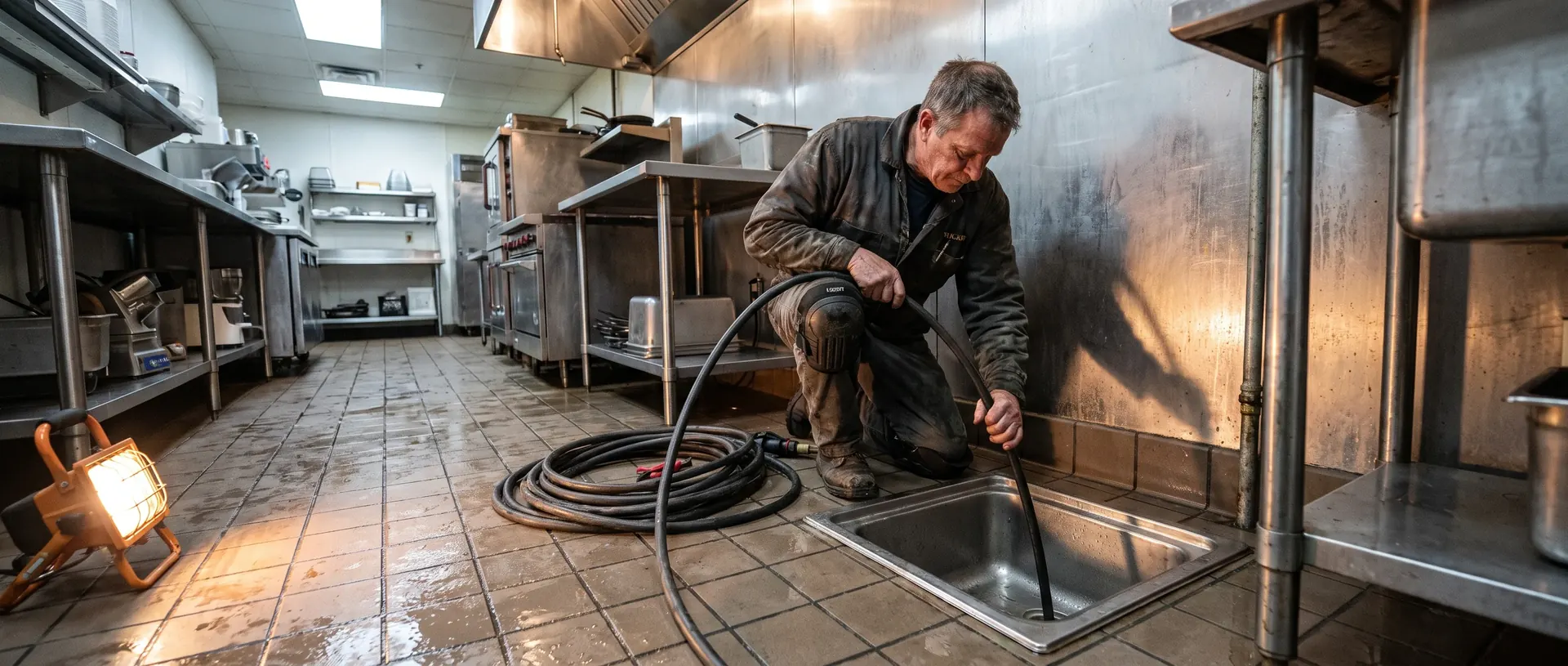
Kitchen and Grease Line Cleaning
Grease does not block a pipe. It shrinks one.
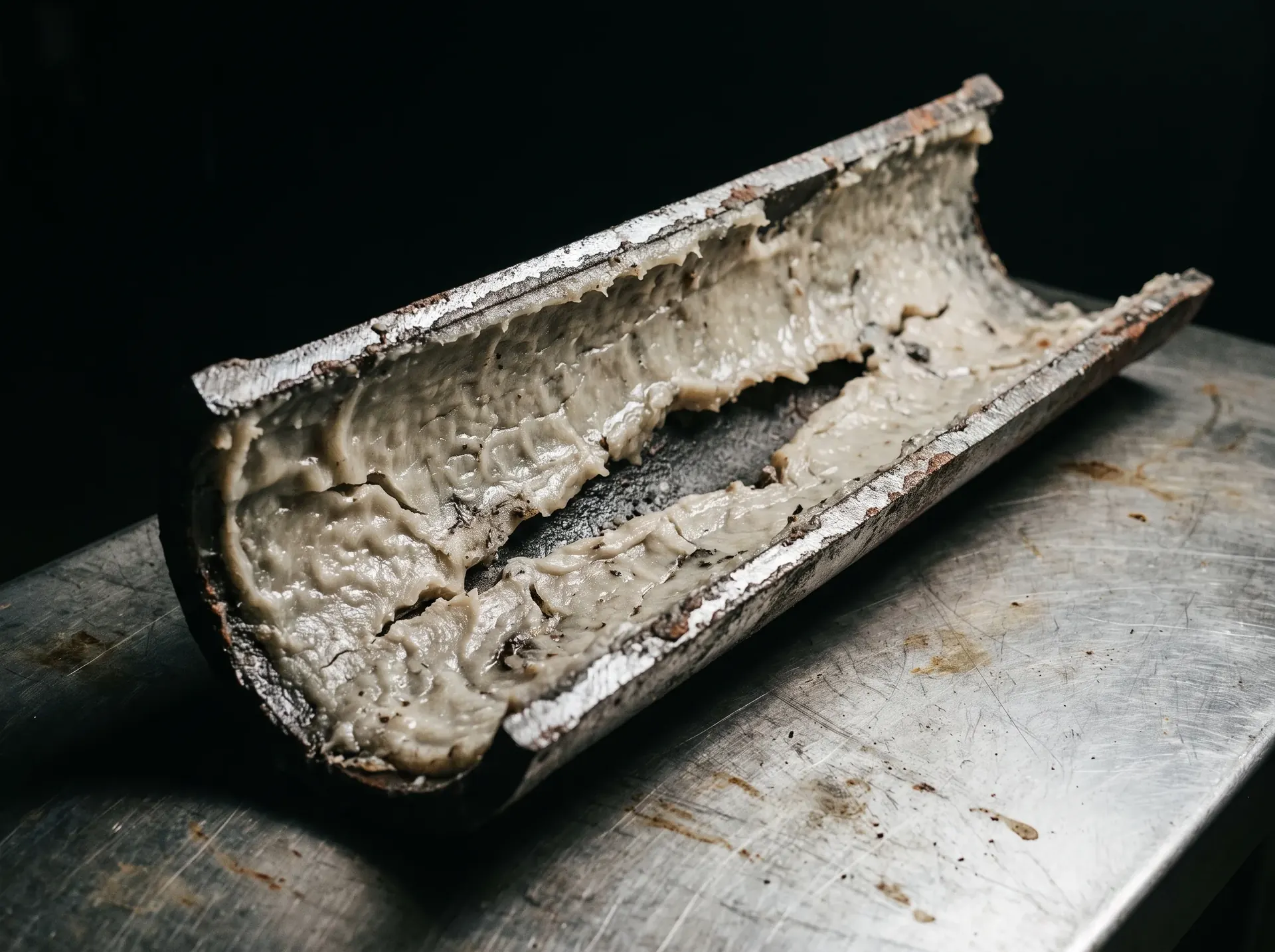
Fat leaves a pan hot and liquid. Twenty feet down a cold kitchen line under a Bellingham house in February, it is neither. It lays down on the pipe wall in a thin layer, cools hard, and waits for the next one.
Do that for fifteen years in a two inch line and the working diameter is the width of a pencil. Nothing is blocking it. There is no object to remove. The pipe has simply become a smaller pipe, and the first coffee grounds or strand of celery that arrives finds a hole it cannot fit through.
Which is why cabling a kitchen line feels like it works and then does not. The cable makes the hole bigger. Everything that made the hole small is still on the wall, still cold, still catching. Three or four months later you are calling again, and it is easy to conclude that you just have a bad drain.
You do not have a bad drain. You have a coated one. Taking that coating off is a different job, and it lasts.
What we find
What we deal with on a kitchen line
Household grease build up
The slow, invisible one. Cooking fat, dairy, oils and the residue off every plate that has been rinsed rather than wiped. It builds fastest in long cold runs, which describes most kitchen lines in this county for five months of the year.
Small commercial grease waste
Cafes, bakeries, restaurant kitchens and coffee shops with a floor sink and a run out to a grease interceptor. Higher volume, warmer waste, and a maintenance interval rather than a one off visit.
Food waste and disposal debris
Coffee grounds, rice, pasta, potato peel and eggshell. None of these dissolve. They pack against a grease layer and turn a narrowed line into a blocked one, which is usually the day you call.
On the day
What a kitchen line visit includes
Working out whether it is a blockage or a coating.
How often it has happened, and how it behaves. A line that blocks every few months is coated, not unlucky.
Clearing the immediate blockage.
So the sink works today. This is the part a cable is genuinely good at.
Jetting the wall back to full diameter.
Water at pressure through a nozzle that scours the whole inside surface and flushes it back to the access. This is the part that changes the interval.
Telling you what is putting it there.
Specifically, not vaguely. Which habits actually matter and which ones are folklore.
Step by step
How we work
We ask how many times this has happened.
Once is an event. Three times in two years is a pipe with a coating on it, and the answer is different.
We check the trap and the tailpiece first.
Not everything is a line problem, and it would be dishonest to jet a line when the blockage is under the sink.
We clear the line so the kitchen works.
Cable and the appropriate head, out to where the branch meets the larger line.
We camera it if the pipe is old.
Cast iron corrodes inward and gets rough, which holds grease far better than smooth plastic does. Knowing that changes the recommendation.
We jet the run.
Nozzle and pressure matched to the pipe, worked the full length, cutting on the way back as well. Then a second camera pass so you can see the wall.
We give you the maintenance answer.
For a house that is usually a habit change. For a commercial kitchen it is an interval, and we will give you a realistic one rather than the shortest one we can sell.
Why us
Why call us for this
We will tell you when cabling is the cheap answer
A one off blockage from a bad Thanksgiving does not need a jetter. We will say so.
We carry the jetter as standard
It is not a machine we have to schedule a second visit for. If the line needs it and the pipe can take it, it happens in the same trip.
We camera old cast iron before putting pressure in it
A lot of Whatcom County kitchen lines are original cast iron. Corroded, thin walled iron and a jetter is a combination that needs looking at first.
Commercial kitchens get a real interval
Not a contract designed around visit frequency. A number based on what your line looked like on the camera.
Reviews
What our customers say
We have not collected any reviews yet. When we do they will appear here in full, in the customer's own words.
Questions
Kitchen and grease line questions
Why does my kitchen sink keep clogging?
Because the pipe has a grease layer on the wall and each clear only reopens a channel through it. The interval between blockages tells you how thick the layer is. Removing the layer rather than the blockage is what stops the cycle.
Do plumbers clean grease traps?
We clean the waste lines running to and from an interceptor, and we jet them properly. Pumping out and disposing of the contents of a grease interceptor is a separate licensed service with its own waste handling requirements, and you will need a grease hauler for that part. We will tell you plainly where the line ends and the trap begins.
How often should a kitchen grease trap be cleaned?
It depends on volume, run length, waste temperature and how the interceptor is sized for the kitchen. Anyone quoting an interval before looking is guessing. We camera the line first and then give you a number you can actually plan around.
How to know if a grease trap needs cleaning?
Slow floor sinks, standing water taking longer to clear, smell coming back into the kitchen, and any gurgling from a drain when another one is emptying. By the time it backs up during service it has been telling you for a while.
What dissolves grease in a grease trap?
Nothing you can pour in that we would recommend. Enzyme and solvent products either emulsify the fat so it re forms further down the line, which moves the problem rather than removing it, or they are aggressive enough to be a problem of their own. Physical removal is the answer, which is what jetting does.
What happens if you don't clean grease traps?
The line narrows, then it blocks, usually at the least convenient possible time. For a commercial kitchen that means closing. There are also health and wastewater discharge requirements attached to interceptor maintenance, so the exposure is not only operational.
Is it safe to pour grease down the drain if I run hot water after it?
No. The hot water carries it further down the line before it cools, which just moves the deposit somewhere less accessible. Fat hardens wherever it stops, and in a Whatcom County winter that happens quickly.
Where we do this work
Anywhere else in Whatcom County, call and ask.
Tell us the symptoms