Clogged Toilet and Fixture Drains
When it is only one fixture, it is a small job
If the toilet is blocked and the shower next to it drains fine, the problem is in that toilet's own branch line, not in the pipe the whole house shares. That is good news. It is a shorter run, a smaller diameter, a more accessible piece of pipe, and a much cheaper afternoon.
The distinction matters because the wrong diagnosis is expensive in both directions. Treating a main line restriction as a blocked toilet means clearing the toilet, watching it back up again the next day, and paying twice. Treating a blocked toilet as a main line problem means paying for equipment that was never needed.
The test is simple. Run water at every other fixture. If nothing else is affected and nothing gurgles anywhere, it is the fixture. If two fixtures react to each other, stop and read about main line clearing instead.
Most fixture blockages are soft and predictable. Hair and soap in a shower. Toothpaste and hair in a bathroom sink. Food waste and fat in a kitchen line. Something that was never meant to be flushed in a toilet. The job is to get it out cleanly, and to leave the line at full diameter rather than with a channel through the middle of what is still in there.
What we find
What we clear on a fixture call
Toilets
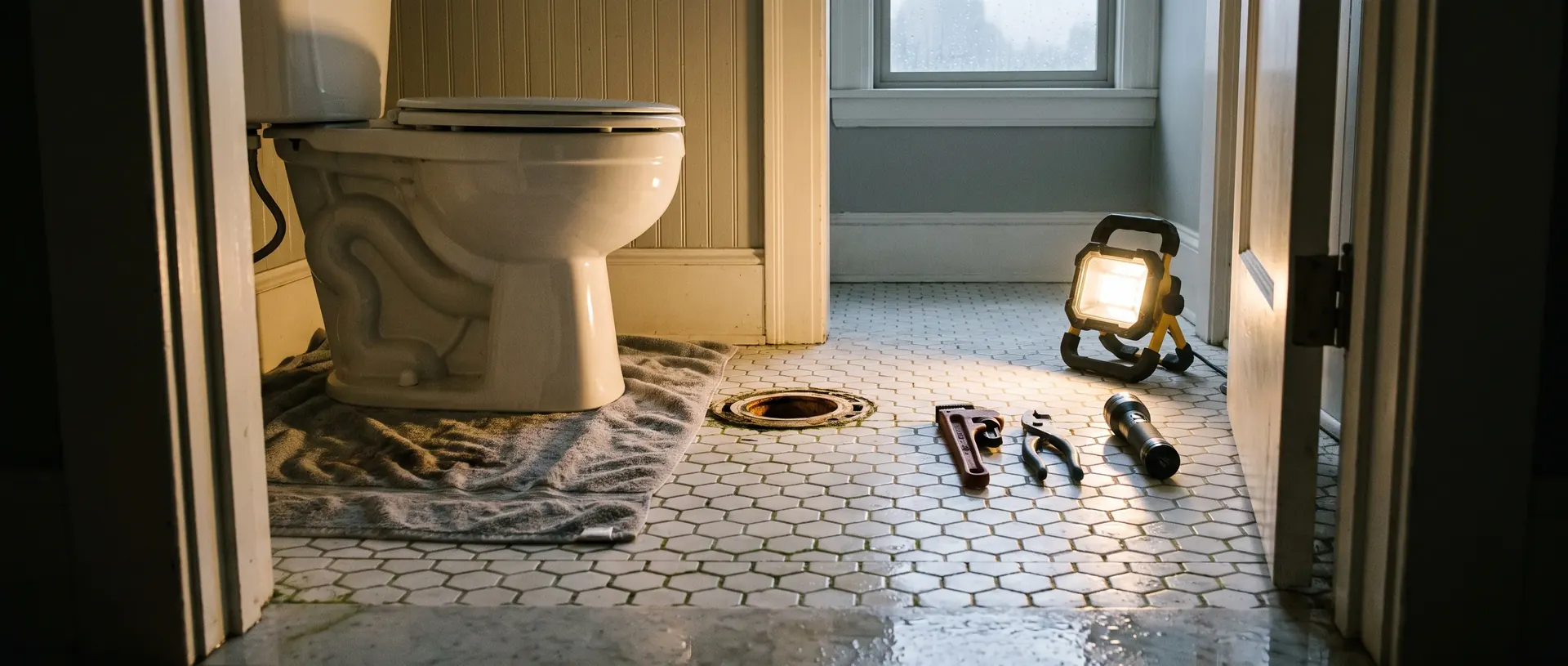
Wipes, cotton products, toys, dental floss, and the occasional item nobody wants to discuss. Most clear from the bowl with a closet auger. Some need the toilet pulled to get at the flange, which we will tell you before we do it.
Tubs, showers and bathroom sinks
Hair bound up with soap, the standard failure of every bathroom drain everywhere. Old bathrooms here often still have their original trap arms, which are narrower than modern equivalents and clog sooner.
Kitchen sinks and laundry standpipes
Food waste, coffee grounds and fat in the kitchen. Lint and detergent residue in the laundry standpipe, which is one of the most commonly ignored drains in the house until it overflows.
On the day
What a fixture visit includes
Confirming it is only that fixture.
We check what else is affected before we start. If the answer changes the job, we say so before doing the work rather than after.
Protecting the room.
Floors covered, the area around the fixture kept clean, and the mess contained. A blocked drain in a bathroom is not an excuse for a mess in a bathroom.
Clearing the branch line properly.
The right auger for the fixture, worked out to where the branch meets the larger line, so the whole run is clear rather than just the visible part.
Telling you what caused it.
Especially when the answer is a product that says flushable on the packet and is not.
Step by step
How we work
You tell us which fixture and what else is affected.
One fixture is a branch line. Two that react to each other is a different job and a different truck load.
We look at the fixture and the trap first.
A surprising number of kitchen and bathroom sink blockages are in the trap or the tailpiece, which is a ten minute job and should be charged like one.
We clear the branch line.
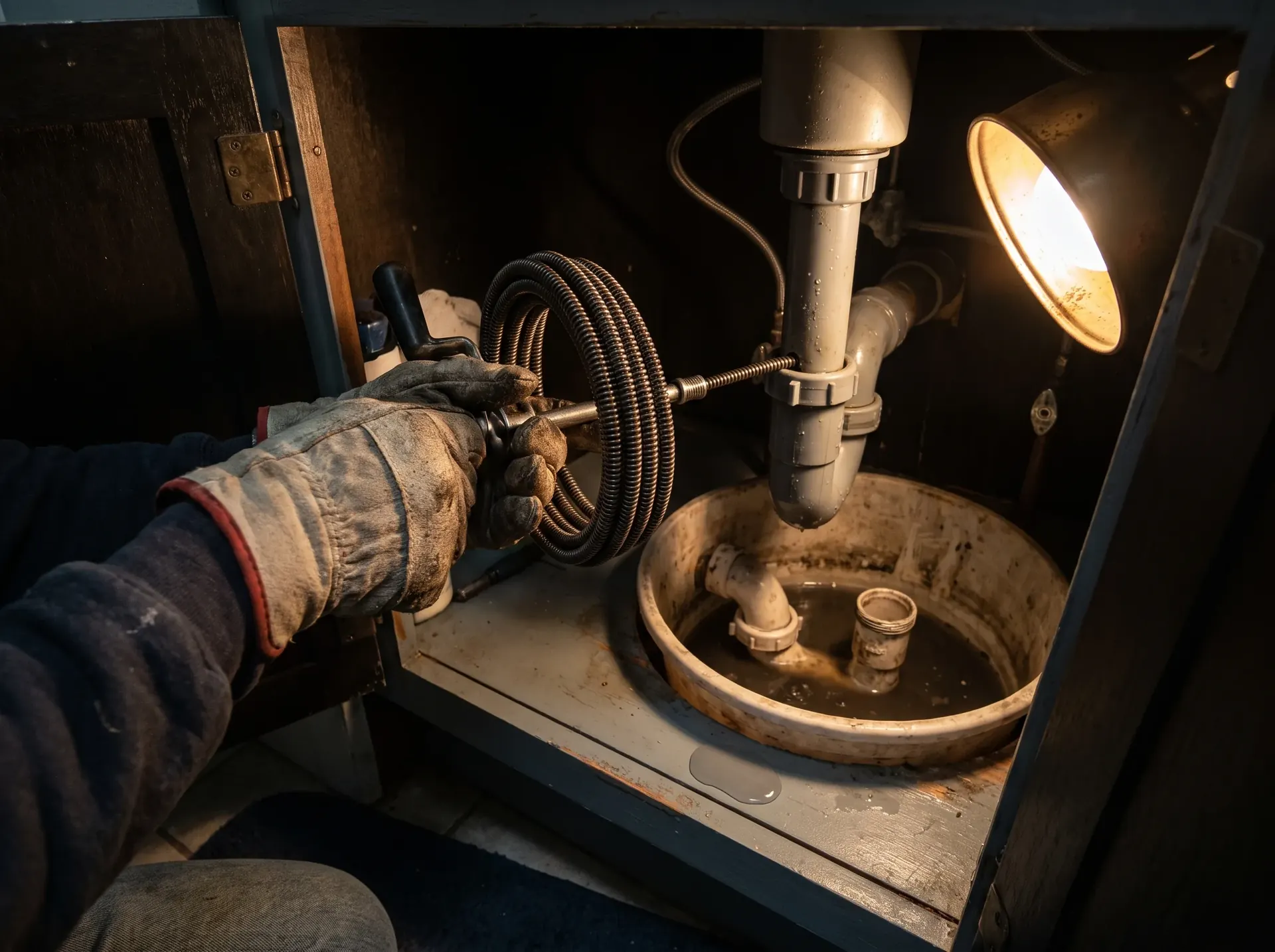
Closet auger for a toilet, drum auger for a sink, tub or shower, sized to the pipe rather than whatever is nearest.
We pull the fixture only when we have to.
Sometimes an object has to be reached at the flange. When that is the case we tell you first, with what it involves, rather than presenting it afterwards.
We test it properly.
Full basin, full tub, several flushes. A drain that copes with a trickle is not a cleared drain.
We tell you if the pattern is wrong.
A fixture that blocks every few months is not a fixture problem any more. It is usually a slope, a trap arm or a shared branch that needs looking at.
Why us
Why call us for this
We charge you for the job you actually have
If it is the trap, it is the trap, and it is priced like a trap. We are not going to find a reason to bring the main line machine in.
We leave the room the way we found it
Covered floors, contained mess, and the fixture reset properly if we pulled it.
We know the older bathrooms here
Pre war Bellingham houses still running original trap arms and cast iron branches behave differently from a 2005 build, and they need a lighter hand.
We tell you the actual cause
Including when the cause is something being flushed that should not be. It is a more useful answer than a cleared drain and no explanation.
Reviews
What our customers say
We have not collected any reviews yet. When we do they will appear here in full, in the customer's own words.
Questions
Clogged fixture questions
Why is my toilet clogged but the shower drains fine?
Because the blockage is in that toilet's own branch line rather than in the pipe the house shares. That is the cheaper of the two problems. If the shower had started gurgling when you flushed, the answer would be different.
Can I use a plunger first?
Yes, on a toilet or a sink, and it often works. Use a flange plunger on a toilet rather than a flat cup one, and do not follow it with a chemical drain cleaner if it fails. If two or three attempts do nothing, stop before you push the blockage somewhere harder to reach.
Are flushable wipes actually flushable?
They leave the bowl, which is all the word on the packet is claiming. They do not break down the way toilet paper does, and they bind together in the line, particularly where there is grease or a rough patch of pipe to catch on. They are a large share of what we pull out.
Why does my shower drain keep clogging?
Hair and soap, bound together, building on the trap arm. Frequency depends on the household. If it is happening more often than it used to, the arm may have a rough or corroded section holding material, which is worth a look rather than a monthly clear.
Do I need to replace the toilet if it is blocked?
Almost never. Blockages sit in the trapway of the bowl or in the branch line, and both clear. A toilet is worth replacing when it is cracked, when it is a very early low flow model that never worked properly, or when an object is genuinely unrecoverable, which is rare.
How much does it cost to unclog a drain?
Less than any main line job. It depends on the fixture, how far in the blockage sits, and whether the fixture has to be pulled to reach it. You get the number before we start.
Where we do this work
Anywhere else in Whatcom County, call and ask.
Tell us the symptoms