These get talked about as if they are two ways of doing the same job, one basic and one premium. They are not. They solve different problems, and picking the wrong one is how people end up paying for the same drain three times.
Here is the whole distinction in one sentence. A cable removes a thing that is in the way. A jetter removes what has built up on the pipe wall.
If you know which of those you have, you know which one to ask for.
Snaking, and what it is good at
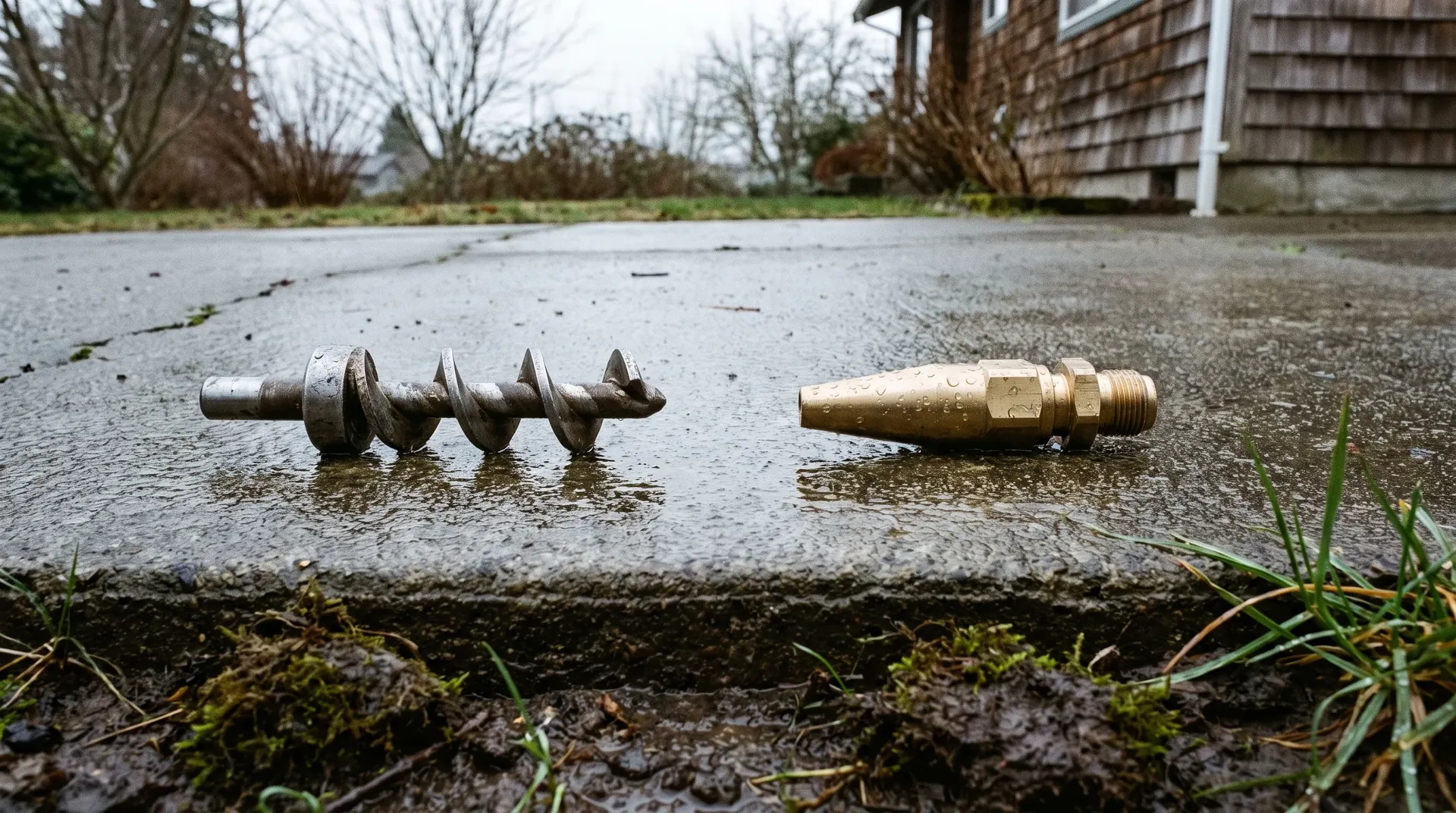
A drain cable is spring wound steel with a head on the end, turned by a motor and fed down the line. Depending on the head it either cuts through what it meets, breaks it up, or hooks it and pulls it back.
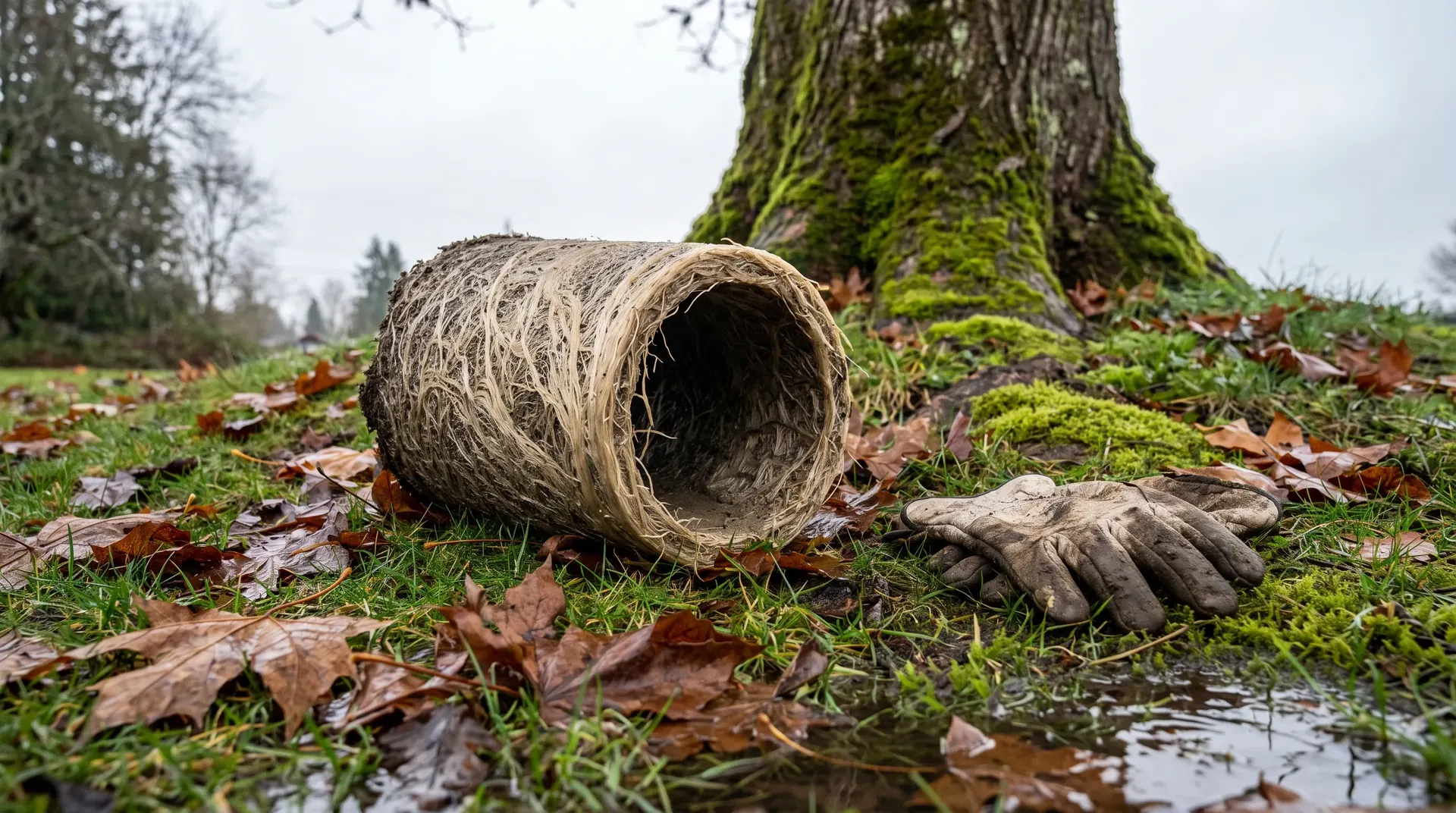
It is very good at exactly what that description suggests. An object in a toilet. A mat of hair and soap in a shower arm. A plug of wipes in a lateral. Thick roots at a joint, which a cutting head will chew through.
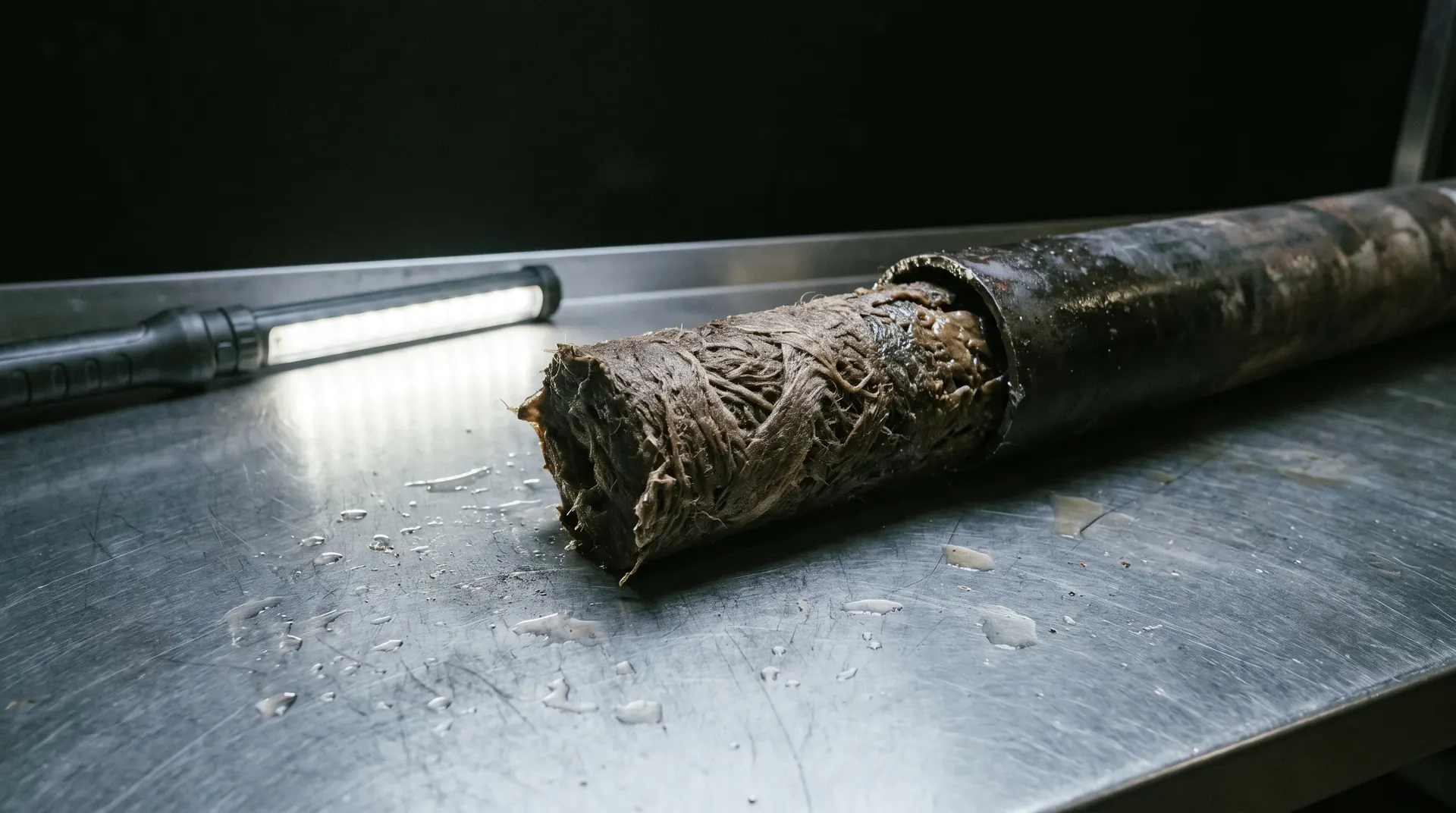
Where it is weaker is anything that is not a discrete obstruction. Push a cable through a pipe whose wall has closed in with hardened grease, and it will bore a channel through the middle. Water flows, the sink drains, the job looks finished. But nothing was removed. The layer that made the pipe narrow is still on the wall, still cold, still catching the next thing down.
That is why some drains seem to need clearing on a schedule. It is not that they are unlucky. It is that the actual problem has never been taken out.
Hydro jetting, and what it is good at
A jetter is a hose with a nozzle that fires most of its water backwards. The rear jets both propel the hose up the line and scour the pipe wall behind them, cutting material loose and flushing it back toward the access point.
The result is different in kind. Instead of a channel through the blockage, you get the pipe back at the diameter it was laid at, with a clean wall and nothing left for the next thing to stick to.
That makes it the right answer for grease, for mineral scale in old corroded cast iron, for sludge settled along a long flat run, and for the fine root hair that a cutting head always leaves behind in a joint.
It is the wrong answer for a facecloth. Pressure does not retrieve objects, and paying jetter money to deal with something a cable would hook out in five minutes is a bad trade.
How many times has this happened?
That is the whole diagnostic, and you already know the answer.
Once, after something specific went down the drain: it is a blockage. Cable it.
Repeatedly, in the same place, on something like a schedule: it is a build up. The interval between blockages is telling you how fast the wall is closing in, and each clear resets it to zero without changing anything. That is a jetting job.
Gradually slower over months, without ever fully stopping: that is usually neither a simple blockage nor a simple coating. It is often a belly holding water, or silt settling in a run with too little fall. Jetting helps and a camera run is what tells you whether the pipe itself has a defect.
Filming the line before you put pressure in it
Jetting is not gentle, and pipe condition matters.
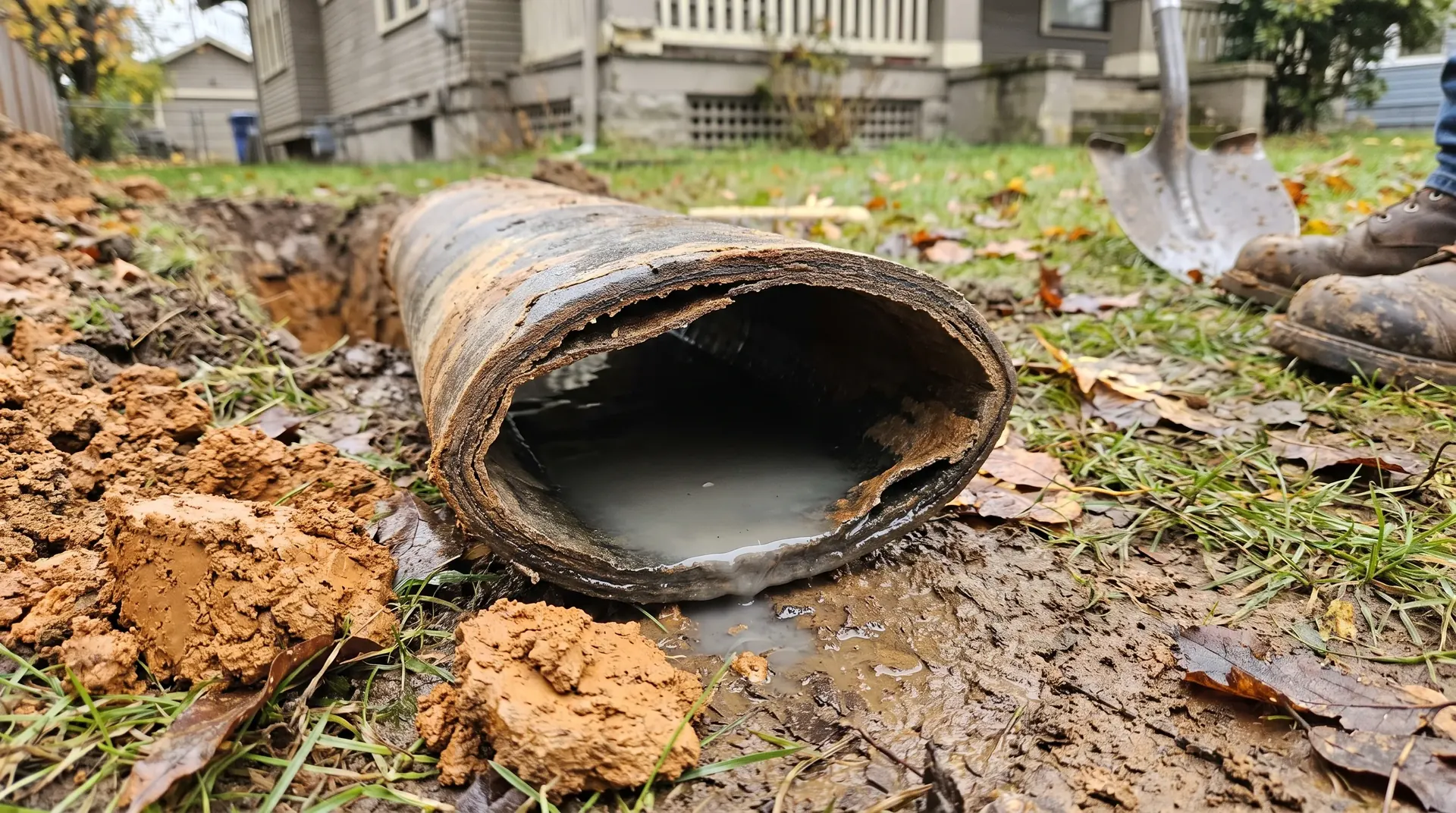
Sound cast iron, vitrified clay with tight joints, ABS and PVC all handle it. What does not handle it is pipe that has already failed structurally: a cracked section, a badly offset joint, or Orangeburg fibre conduit that has lost its round shape.
Orangeburg matters here more than most places, because a large share of Whatcom County housing went up between the mid 1940s and the early 1970s, which is exactly when it was going into the ground. It is bituminous impregnated wood fibre, and when it fails it deforms and delaminates rather than cracking. Putting a jetter into a run of it that has gone oval can turn a blocked line into an excavation.
So on anything old, the camera goes in first. It costs a little time and it is the difference between a clean line and a hole in the lawn.
Which one to ask for
-
A single blockage after something went down that should not have: ask for cabling
-
The same drain blocking every few months: ask about jetting
-
A kitchen line that has never really been right: jetting, after a camera run
-
Roots you have had cut before: cutting followed by jetting, then a conversation about the joint
-
A line getting gradually slower over a long period: camera first, then decide
-
A house built before about 1975: camera first, always, before any pressure
If you are not sure which one you have, describe the pattern rather than requesting a method. The pattern is the diagnosis.