There is one finding on a camera run that changes the conversation more than any other, and in this county it is not roots or a broken clay joint. It is Orangeburg.
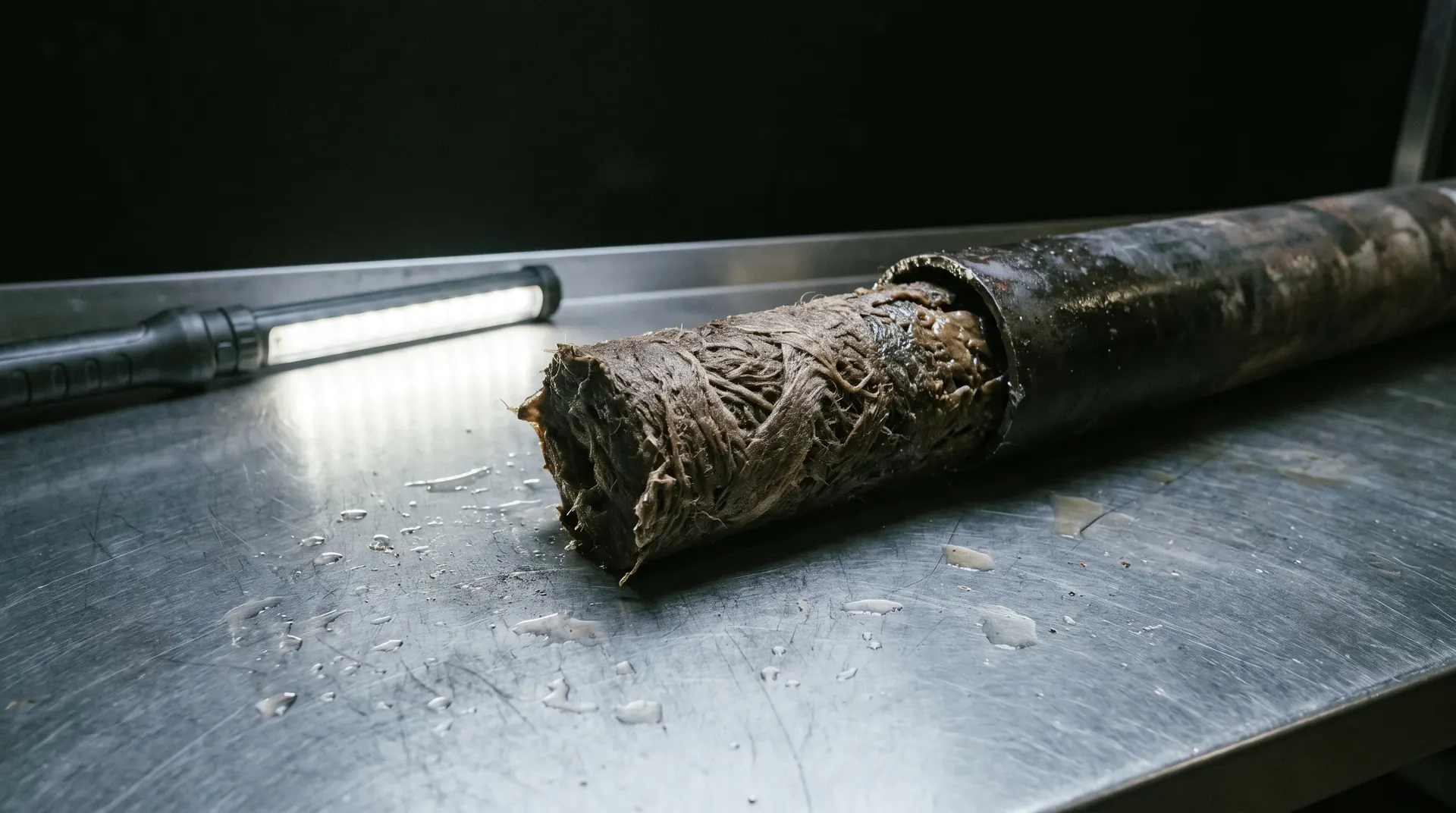
If you own a house here that was built somewhere between the mid 1940s and the early 1970s, there is a genuine chance that the pipe carrying waste away from it is made of tar impregnated wood fibre. Not clay, not iron, not plastic. Wood fibre and bitumen, rolled into a tube.
It was a legitimate product, widely used, cheap and quick to install during a construction boom when metal was in short supply. It was never intended to last a century, and a lot of it is now well past the service life anyone expected of it.
Tar and wood fibre, rolled into a pipe
Orangeburg is layers of wood pulp bound with hot bitumen and formed into lightweight sections. It is easy to handle, easy to cut, and needs no special skill to lay, which is why it went in so quickly and so widely during the post war housing boom.
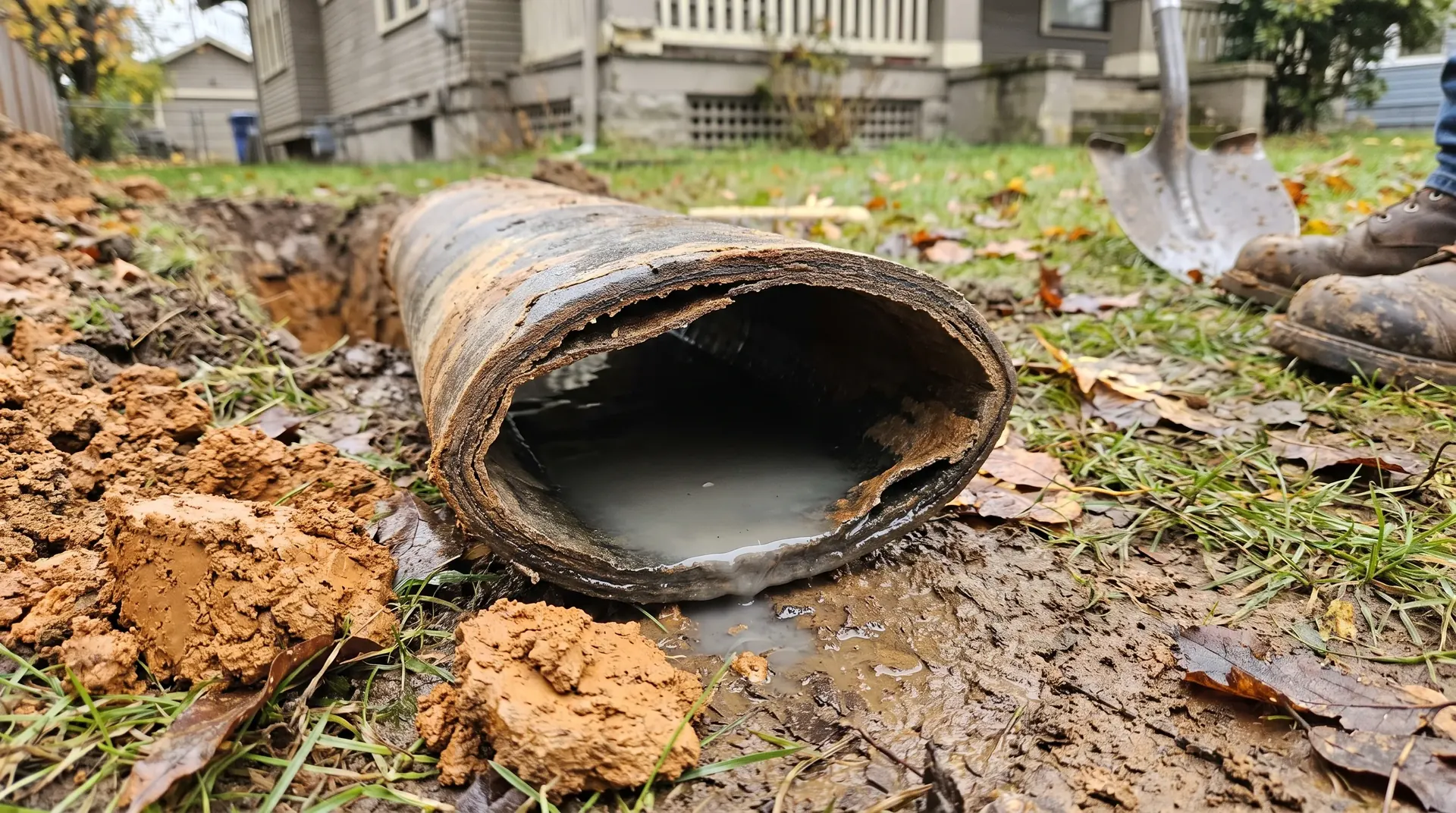
The problem is what happens to it under load and moisture over decades. Rather than cracking like clay or corroding like iron, it deforms. The round section gradually squashes into an oval and then flattens further, while the layered wall starts to separate and blister inward.
The result is a pipe that has lost most of its cross section without ever breaking. It also has no structural reserve left, which is the part that matters when somebody puts equipment into it.
Age first, then footage
The first filter is the build date. Houses built here from roughly 1945 through to about 1972 are in the window. That covers a lot of the mid century stock in Bellingham, in the small cities, and in the earlier suburban development around them. Anything built after about 1975 is very unlikely to have it.
The second filter is the symptom pattern. Orangeburg does not usually announce itself with a dramatic failure. It presents as a line that has been getting gradually slower over a long period, backs up more easily than it used to, and clears without much difficulty each time. That is the profile of a pipe that is narrowing rather than blocking.
The only way to be certain is to look. On camera it is distinctive: a dark, matt, fibrous wall rather than the glazed surface of clay or the rough rust of old iron, usually visibly out of round, and often with delaminated material curling inward. Anyone who has seen it before will recognise it in seconds.
There is no way to identify it from the surface, and there is no reliable way to guess from the age alone.
It changes what is safe to do
Two practical consequences follow from finding Orangeburg.
The first is that jetting is off the table in any section that has deformed. Water at pressure inside a pipe with no structural reserve is a way of converting a slow drain into an excavation on the same afternoon. This is the main reason we camera anything of an age before putting a jetter into it.
The second is that spot repairs are usually a poor investment. Clay fails at a joint, which is a point failure and a point repair. Orangeburg fails along its length, because the whole run has been under the same load for the same number of decades. Fixing one flattened section of a pipe whose entire length is the same age and material tends to be the first of several visits.
The realistic options
If a camera run finds Orangeburg still holding a reasonably round shape, you have time, and the sensible plan is to know it is there, avoid pressure in the line, keep an eye on how the drains behave, and budget for replacement rather than being surprised by it.
If it has visibly deformed, replacement of the affected run is the answer. Trenchless methods suit some situations, particularly long straight runs under hard surfaces, and are unsuitable for others, particularly where the pipe has already collapsed. Which applies to you depends on the footage, the depth, the route and what is above it.
The one thing worth avoiding is repeated clearing of a line that is known to be failing material. That is buying intervals on an asset with no future, and the intervals get shorter.
If you are buying a house in this county in that age bracket, a sewer scope before closing is a small cost that occasionally changes a purchase decision entirely. It is the single most valuable inspection nobody thinks to order.
Worth looking into if
-
The house was built between roughly 1945 and 1972 and nobody has ever filmed the sewer line
-
Drains have been getting gradually slower over years rather than blocking suddenly
-
The line has backed up more than once and clears easily each time
-
Somebody has recommended jetting and the pipe material is unknown
-
You are buying a mid century house here