If you live in an older Bellingham neighbourhood with a mature bigleaf maple or a western red cedar anywhere near your lateral, roots are not an unlucky event. They are the most likely thing that will ever go wrong with your sewer line, and the conditions here could not be more favourable to them.
Old jointed clay pipe. Ground that stays damp most of the year. Large trees that were planted around the same time the houses were built and have had eighty years to work on it.
The useful thing to understand is that clearing roots and stopping roots are two different jobs, and most of the frustration people have with this problem comes from being sold the first while assuming they bought the second.
They are not breaking through the pipe
A root does not drill through sound pipe. It does not need to.
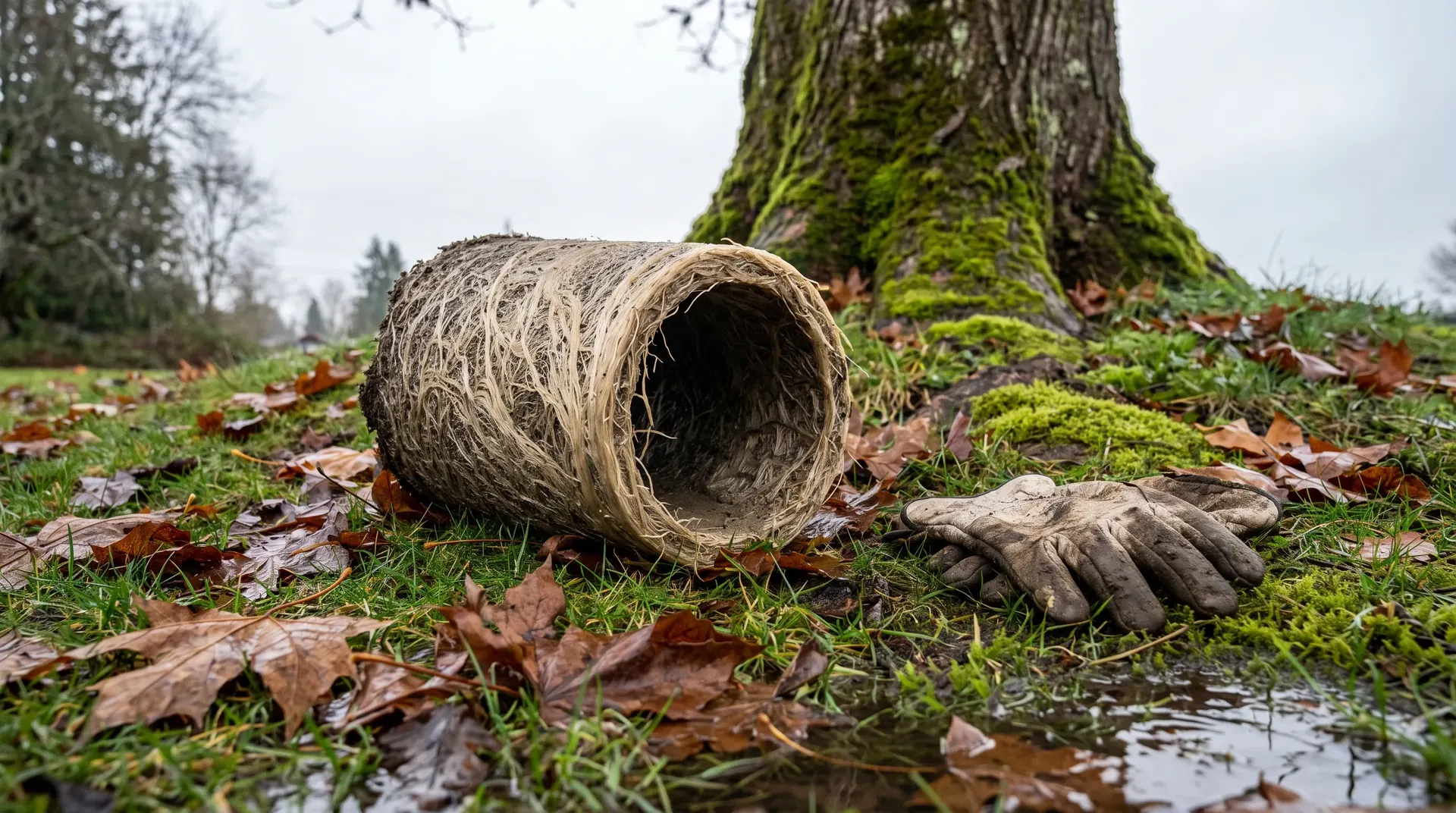
What it does is follow moisture. A sewer line carries warm water and nutrients, and if there is the smallest seep at a joint, the vapour reaching the surrounding soil is a signal. Fine root hairs grow toward it, find the gap, and pass through it.
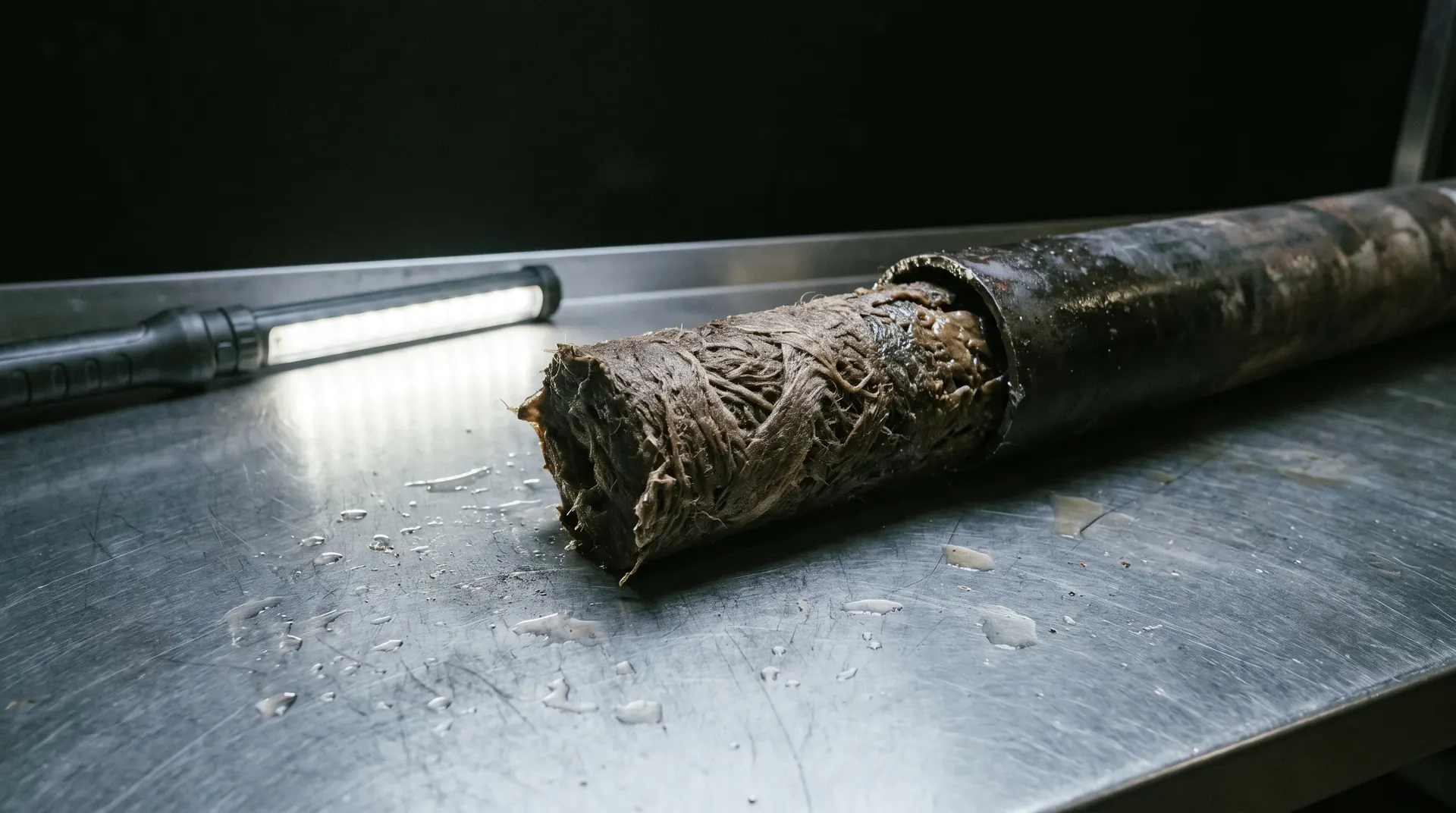
Once inside, the environment is close to ideal: warm, wet, fertilised, and with no competition. What was a hair thickens into a mass, and that mass catches every solid that passes. Paper, wipes, grease, all of it snags and builds.
That is why the blockage is rarely the roots by themselves. It is roots plus everything they have caught.
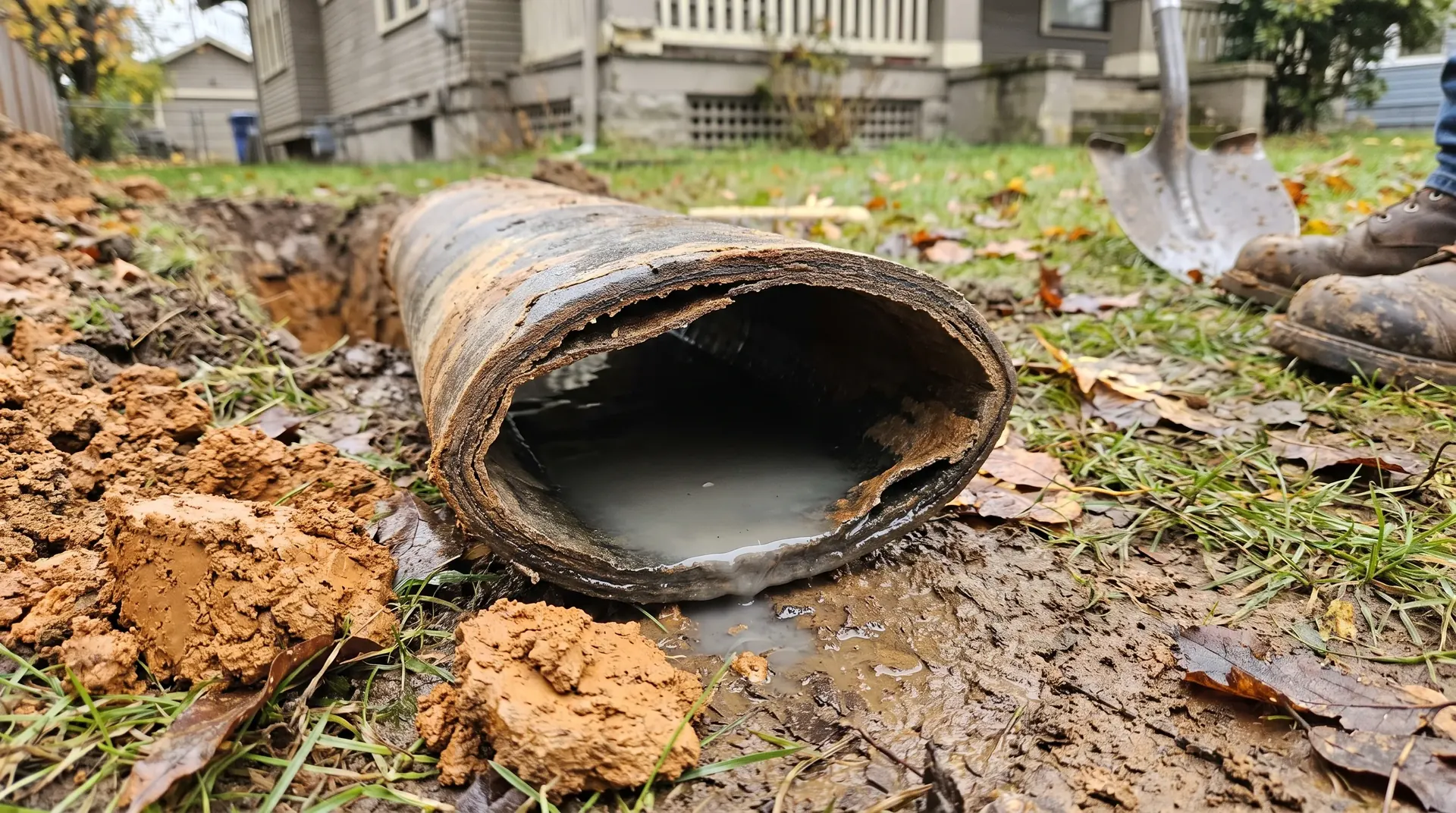
The clay pipe under the older parts of this county is jointed every few feet, which gives roots many opportunities. Cast iron fails differently, corroding and cracking, and roots take those cracks just as happily. Modern ABS and PVC in long fused or gasketed runs offer far fewer openings, which is why root calls skew so strongly toward older housing.
Cutting, then jetting
Mechanical cutting is the first step. A cable with a cutting head sized to the pipe is run through the mass and shears it off at the pipe wall, sometimes over several passes. This is effective and it restores flow properly.
What it leaves behind is fine hair in and around the joint, and that hair is what regrows fastest and starts catching solids again soonest.
Jetting after cutting is what deals with that. Water at pressure scours the wall and the joint area, flushes the debris back to the access, and leaves a clean pipe instead of a trimmed one. The difference is not dramatic on the day. It is very noticeable in how long the line stays clear.
That combination, cut then jet, is the honest maximum of what can be done from inside the pipe.
The things that do not fix it
Cutting alone, repeatedly
It works and it is sometimes the right economic choice, but understand what you are buying. You are buying an interval. If nothing changes at the joint, the roots come back, and each cycle usually gets a little shorter as the opening widens.
Chemical root killers
Foaming products can slow regrowth in the immediate area of contact. They do not remove an established mass, they do not repair anything, and they do nothing about the reason the roots are there. They are a maintenance product for a line that has already been cleared, not a solution.
Removing the tree
Rarely the right answer and often not effective. The root system stays in the ground and takes years to die back, the opening in the pipe is still open, and you have lost a mature tree that was probably worth more than the repair.
Closing the way in
The permanent fix addresses the opening, not the root.
Once a camera run has located the entry point and its depth, the options are a spot repair replacing the failed joint or section, a longer replacement if the pipe has multiple openings, or a liner where the pipe is otherwise structurally sound and the situation suits it.
Which one is right depends entirely on what the footage shows. One open joint in otherwise sound clay is a small repair. A run with root intrusion at five separate joints is telling you the material has reached the end of its service life, and repeated repairs to it are throwing money at a slow failure.
That decision needs the recording, the distance and the depth. Nobody should be making it from a description.
When to have it looked at
-
Your main line has backed up more than once and nobody has filmed it
-
You have had roots cut before and the interval is getting shorter
-
The house is pre 1975 and there is a mature tree within reach of the lateral
-
You are buying a house that fits that description
-
Drains gurgle in wet weather, which can mean roots plus infiltration at the same joint