Every fixture in your house has its own short branch line, and all of those branches feed into one larger pipe that carries everything out to the street or the septic tank. That pipe is the main line, and it is the only one whose failure affects the whole building.
Telling the two apart takes about two minutes and it is genuinely worth doing before you call anyone, because it changes the equipment, the price and the urgency.
The short version: if only one fixture is affected, it is that fixture. If fixtures react to each other, it is the main.
1. One fixture reacts when you use another
This is the single clearest sign and the one people most often notice without recognising it.
You flush the toilet and the shower next to it gurgles. You run the washing machine and water rises in a downstairs tub. You empty a kitchen sink and hear the toilet bubble.
That is air being displaced. Water going down a restricted main has to push air somewhere, and it comes back up through the nearest trap. Two fixtures cannot talk to each other unless they share a pipe, and the pipe they share is the main.
2. The lowest drain in the house is the one that backs up
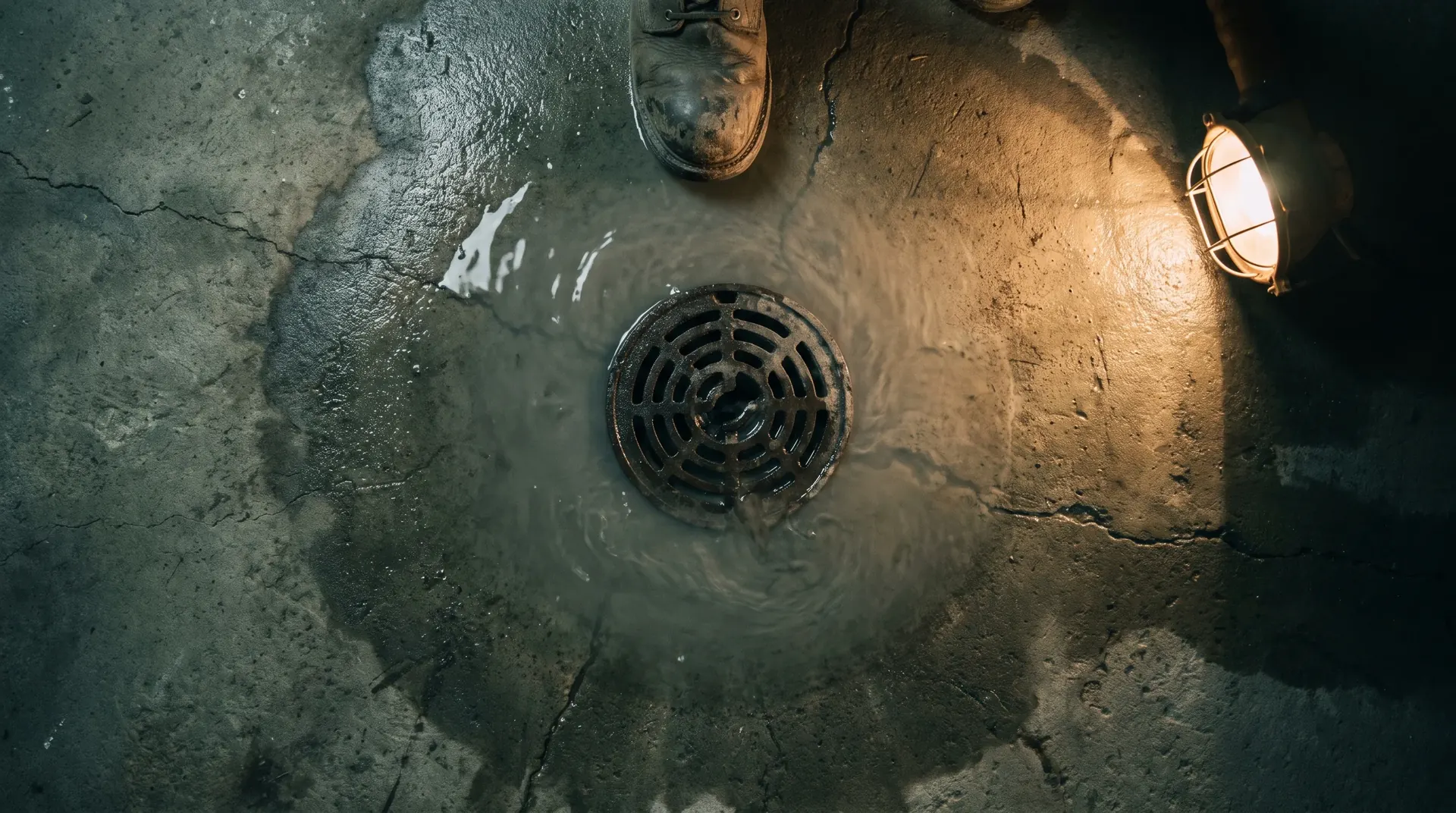
Water finds the lowest opening. If the main line is restricted, the first place anything appears is a basement floor drain, a ground floor shower, or a downstairs toilet.
If the trouble is upstairs and the ground floor is fine, that points at a branch. If the ground floor is where the water is showing up while everything above it drains, that points at the main, and it means the level is already backing up the pipe.
3. Several fixtures are slow at once
One slow sink is a sink. Two slow sinks in different rooms, a slow tub and a toilet that empties lazily, all in the same week, is a shared pipe running out of capacity.
The exception worth knowing is a whole bathroom group on one branch. If everything in one bathroom is slow and the rest of the house is fine, that can be that bathroom’s branch rather than the main. If it crosses bathrooms, it is the main.
4. Gurgling with no obvious cause
Air moving where it should not be is the earliest warning you get, often weeks before anything actually stops. A toilet that bubbles briefly when nobody has touched it, a drain that sighs after the washing machine finishes.
This is the stage at which the problem is cheap.
5. Smell, and water where there should not be
A sewer smell inside the house, or damp appearing near a cleanout outside, means waste is not going where it should. If waste is escaping from an exterior cleanout, that is the pressure relieving away from the building, which is much better than the alternative. Leave it alone and call.
Stop using water. All of it.
This is the most useful thing anyone can do and it costs nothing.
A restricted main line is filling up. Every flush, every shower, every load of washing goes into a pipe that cannot clear it, and the level rises until it finds the lowest opening in the building. The difference between a cleared drain and a flooded floor is very often just how much water went in after the problem started.
So: nothing down any drain until it is cleared. Tell everyone in the house. If it is a rental or a business, tell the people who will not otherwise know.
Two more things. Do not add chemical drain cleaner, because it will not clear a main line and it makes the water hazardous for whoever has to work in it. And keep people and pets away from anything that has already come up.
Clearing it is only half the job
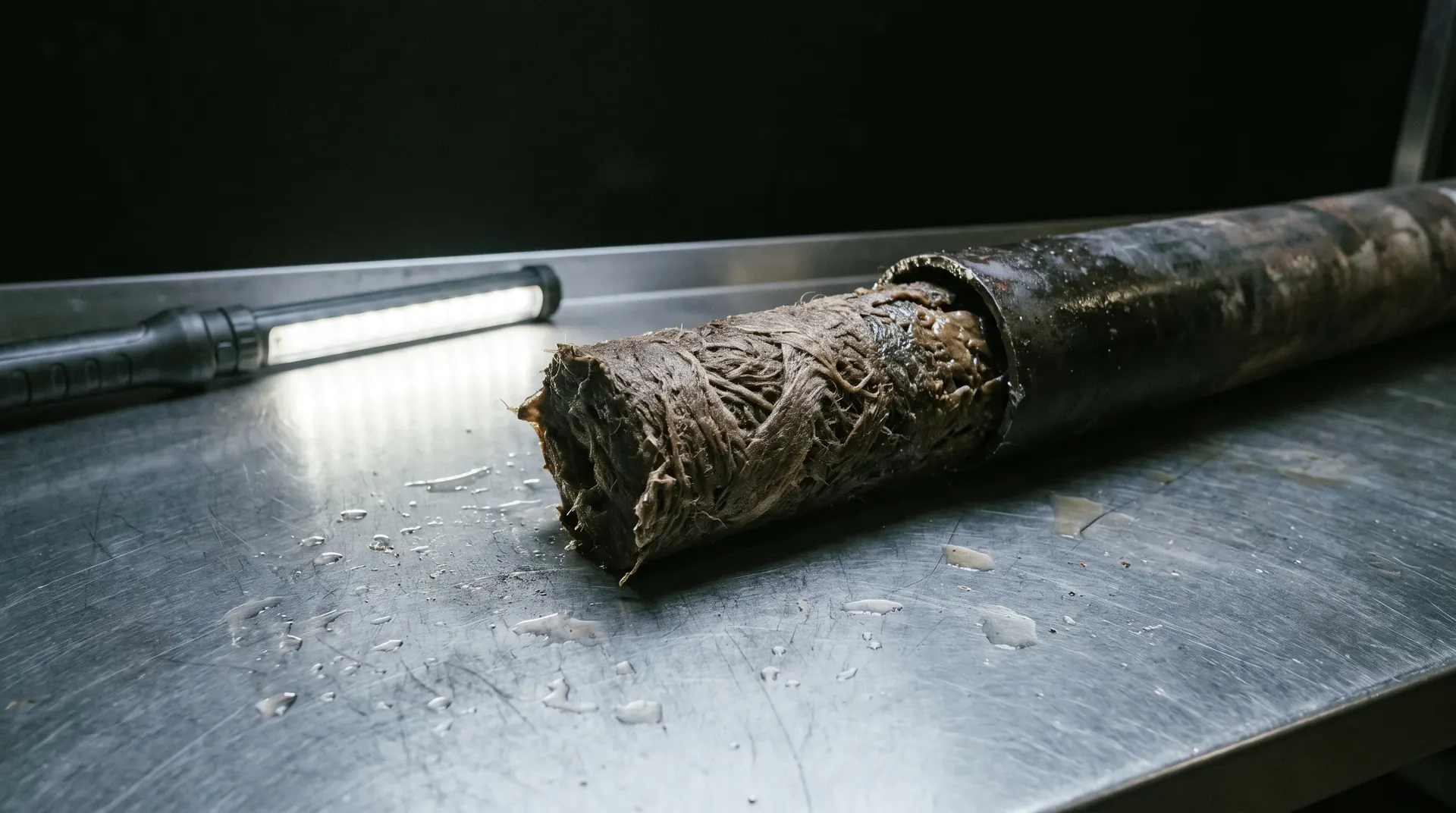
A main line that blocked once will very often block again, and the reason is usually visible on camera.
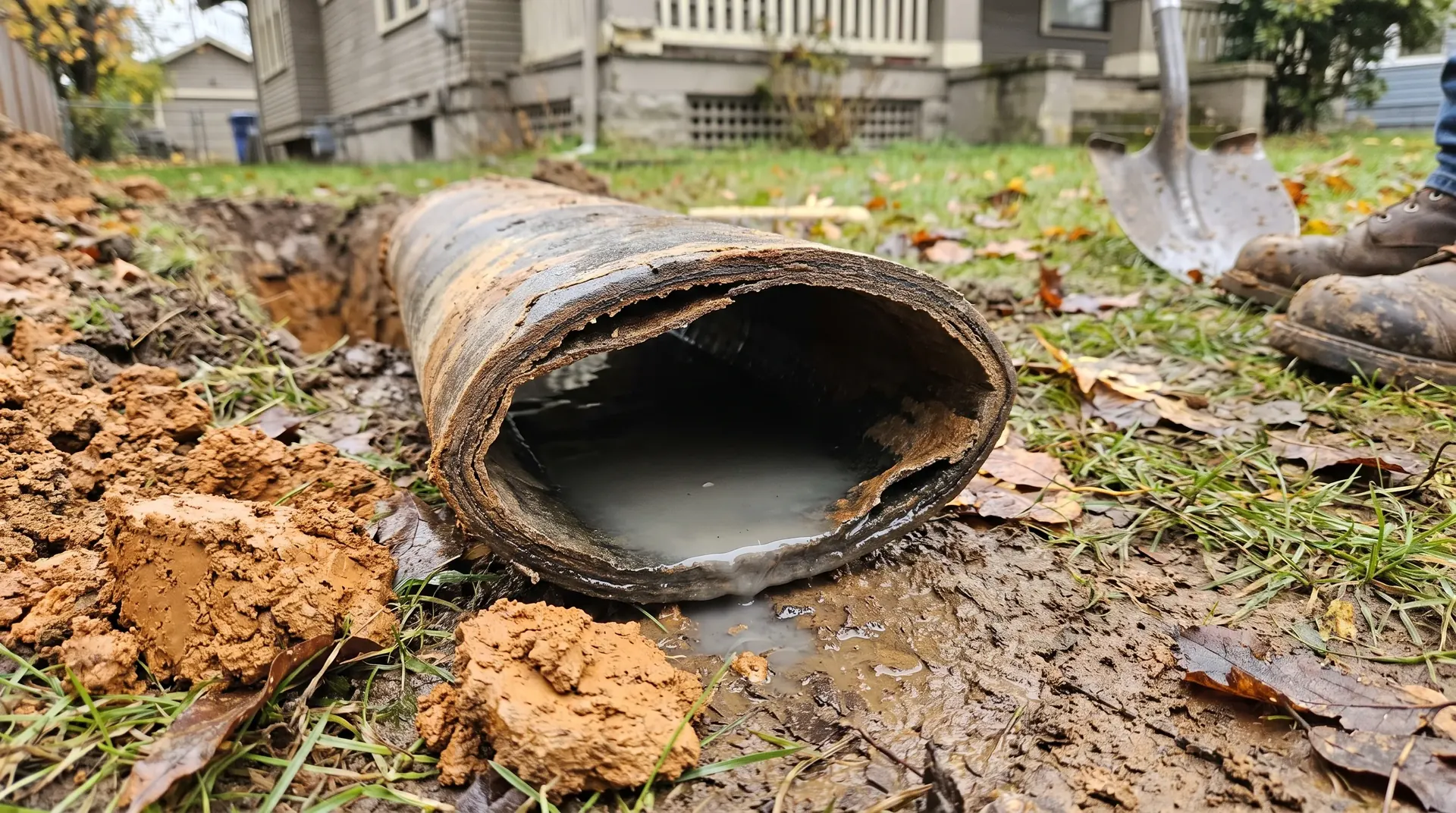
Roots through a joint, an offset where the ground has moved, a belly holding standing water, or a corroded section catching solids. Each of those will produce the same backup on its own schedule, and clearing without looking means finding out by repetition.
That is why we treat a camera run as standard on main line work. It is the difference between knowing you had a bad day and knowing you have a pipe with a defect at thirty two feet, five feet down, at the corner of the driveway.
Call now if
-
Anything is coming up at a floor drain, a downstairs shower or a ground floor toilet
-
Using one fixture affects another
-
More than one drain is slow at the same time
-
There is a sewer smell in the house with water appearing somewhere unexpected
-
The house has one bathroom and it has stopped
Call soon, but it is not an emergency, if you have occasional unexplained gurgling and everything still drains. That is the cheap stage.