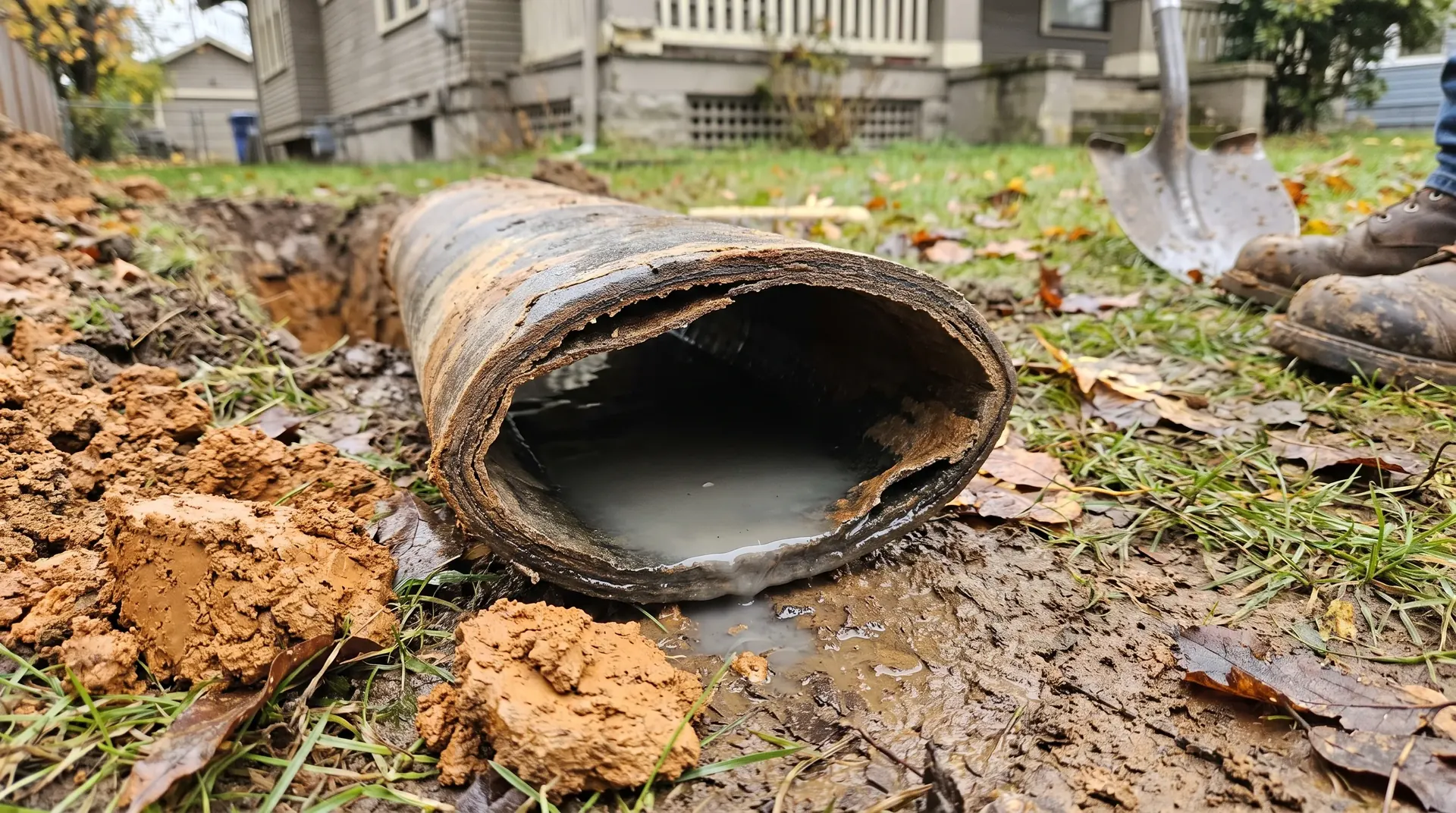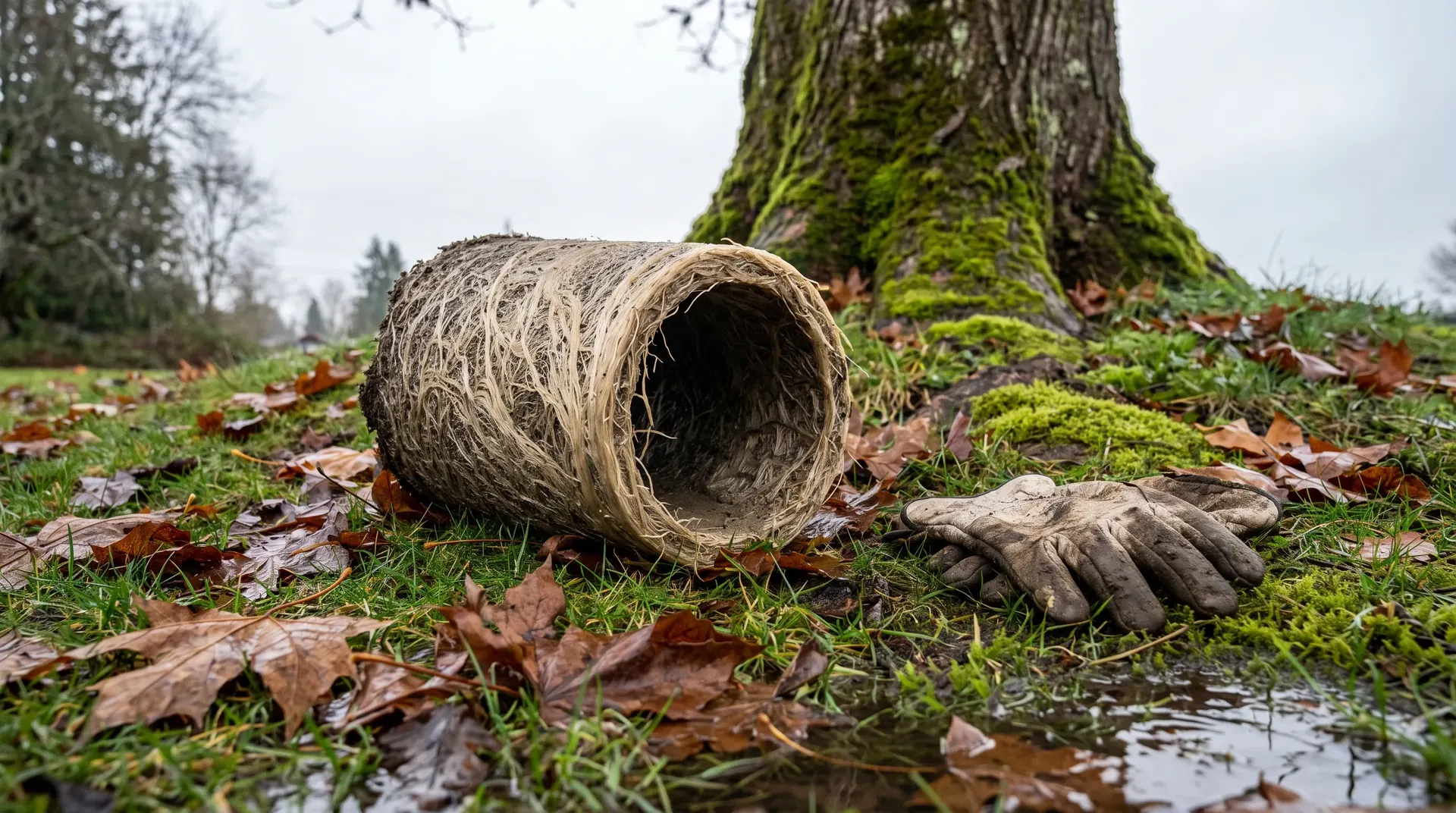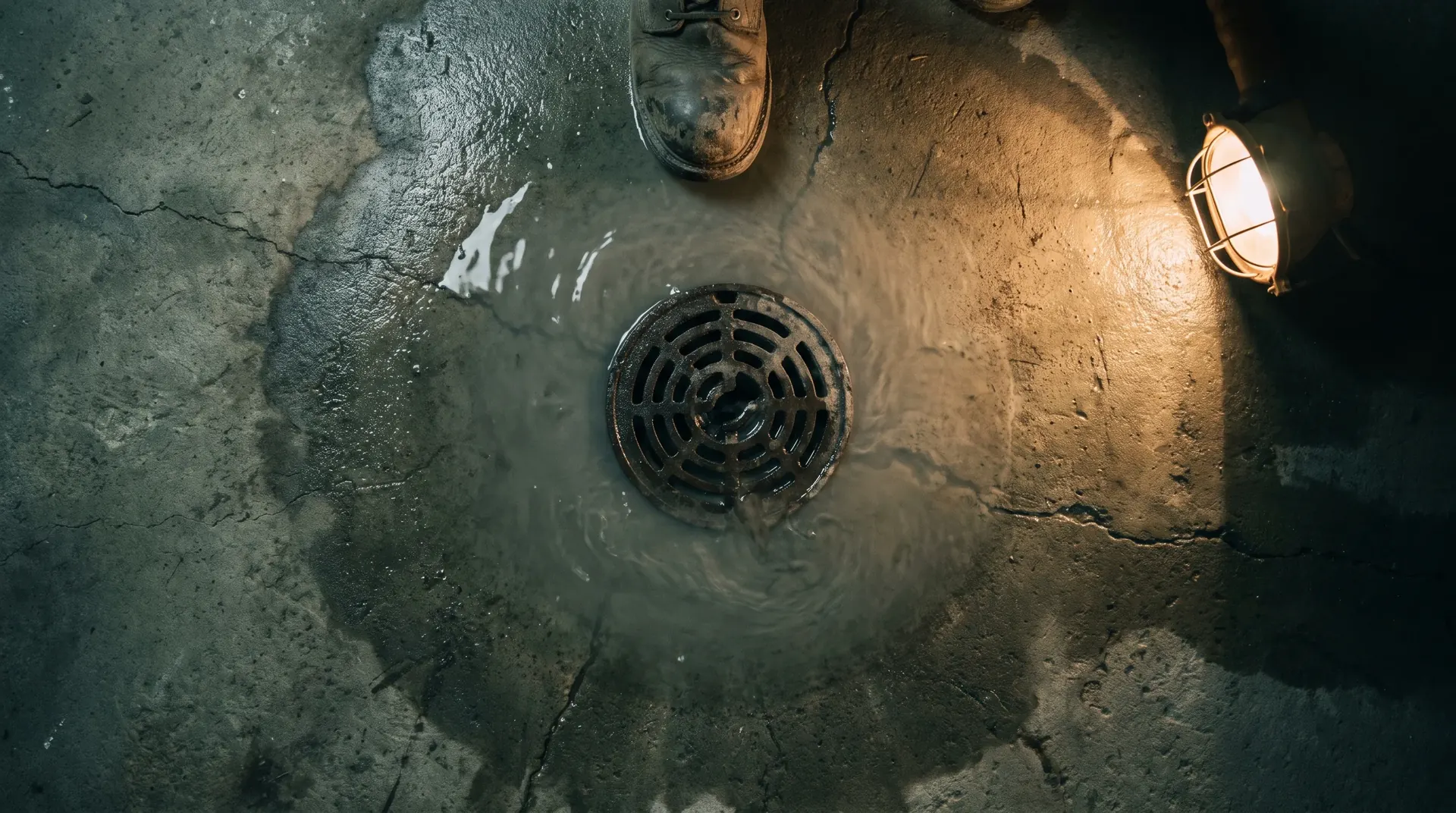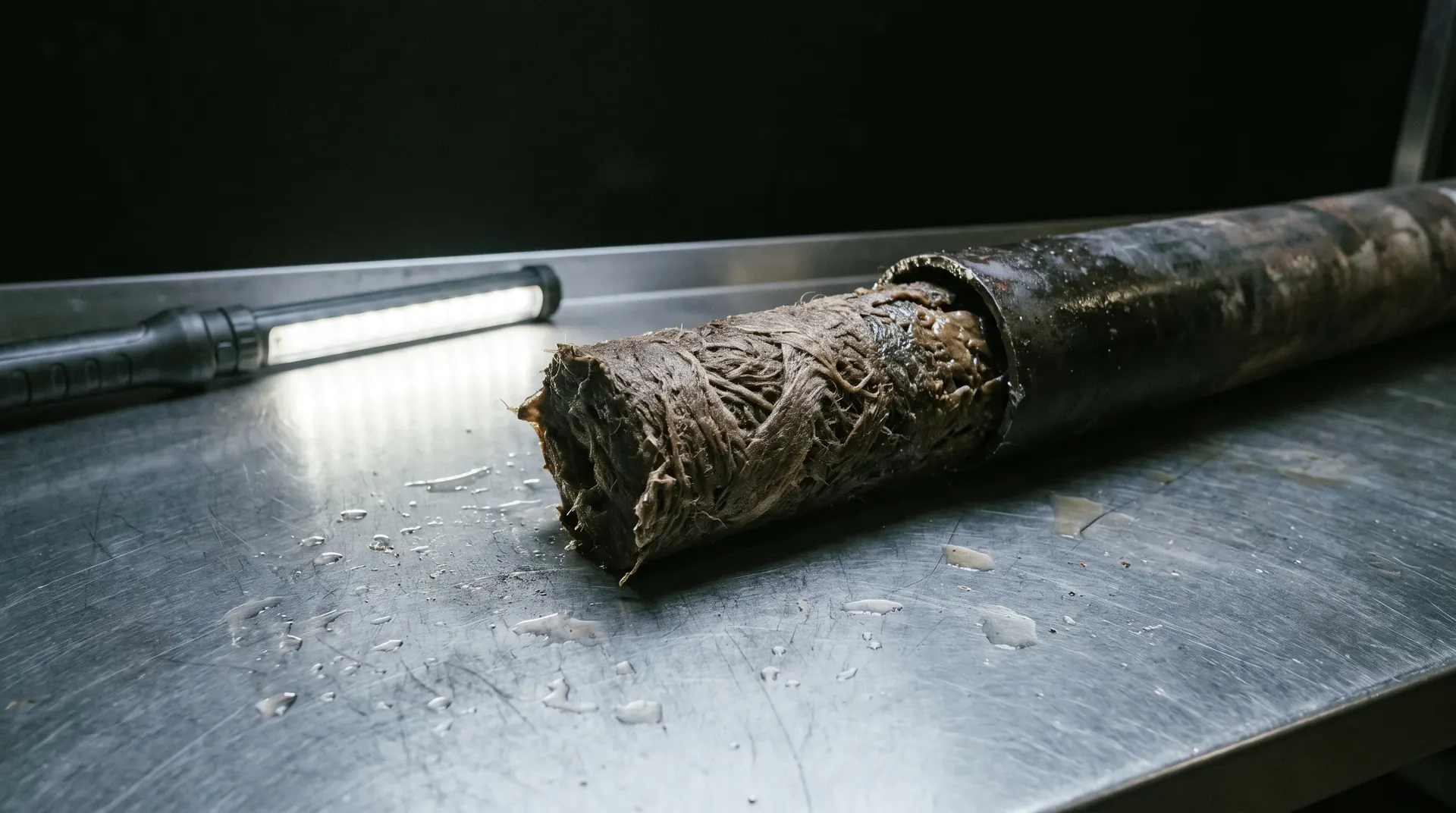
Lists like this usually read as scolding, so here is the version that is actually useful: what each of these things does once it is out of sight, and why the pipe reacts to it the way it does.
Understanding the mechanism is what makes the advice stick. Nobody remembers a rule. Everybody remembers what a cut open pipe looks like.
Fat, oil and grease
The single biggest cause of kitchen line work, and it is not the dramatic version people picture. Nobody is pouring a pan of oil down the sink.
It is the residue on every plate, pan and dish that gets rinsed rather than wiped. It goes down warm and liquid, travels a few feet into a pipe that is at the temperature of the ground under a Whatcom County house in February, and stops being liquid. It lays down on the wall in a film, and the next one lays down on top of it.
Given years, a two inch line ends up with a working diameter the width of a pencil. Nothing is stuck in it. The pipe has become a smaller pipe.
Hot water does not solve this. It carries the fat further along before it cools, which means the deposit forms somewhere less accessible. Scrape plates into the bin, wipe greasy pans with a paper towel before washing, and pour cooking oil into a container rather than the sink.
Coffee grounds, rice, pasta and fibrous peel
These do not dissolve and they do not break down. Coffee grounds behave like fine sand and settle wherever the flow slows. Rice and pasta absorb water and swell. Potato peel and celery string bind into mats that catch everything else.
Individually none of them would block a healthy line. What they do is find the grease layer already on the wall and stick to it, which is why the combination is what actually causes the blockage rather than either one alone.
Eggshells and a note about disposals
A garbage disposal grinds solids small enough to travel, which is genuinely useful, and then those small pieces meet the grease film. A disposal is not a substitute for a bin, and it is not a licence to put anything into the drain that will fit through it.
Wipes, including the flushable ones
The word on the packet means it will leave the bowl. It is not a claim that it breaks down.
Toilet paper is designed to fall apart in water within seconds. Wipes are designed not to, because a wipe that disintegrated in your hand would be useless. Once in the line they stay intact, they catch on anything rough, and they bind together into a rope that will stop a four inch pipe.
They are consistently one of the largest components of what we pull out of main lines.
Cotton products, dental floss and hair
Cotton buds, cotton pads, tampons and their applicators do not break down either. Dental floss is worse than it looks: it is a strong thin fibre that ties itself around anything else in the pipe and turns loose material into a solid mass.
Hair is the standard cause of every slow shower and bathroom sink in the world. It binds with soap into a mat on the trap arm. A drain screen costs almost nothing and prevents most of it.
Cat litter
Even the varieties sold as flushable. The whole product is designed to clump hard when it meets liquid, which is precisely the last property you want in something travelling down a sewer line.
Chemical drain cleaners
Worth listing here because they cause a specific set of problems. They rarely clear a real blockage, they sit against the pipe wall while they fail to work, they attack older material, and they make the standing water hazardous for whoever opens the line next.
If you have already used one, say so when you call. It changes how the job is handled and it matters for the safety of the person doing it.
Habits will not fix a line that is already coated
Changing what goes down the drain stops the layer getting thicker. It does not remove the layer that is already there.
If your kitchen sink has blocked more than once in a year, or a drain has been getting gradually slower over months, the pipe already has a build up on it and better habits from today will not take it off. That is a jetting job, and it is worth doing once properly.